
How Bench Warrants Work in Hartford County
Judges in Hartford County sit on the Connecticut Superior Court, and General Statutes §54-2a gives them authority to issue bench warrants and capias process in certain criminal matters. The missed court date is the classic trigger. People call that failure to appear, or FTA, but the label alone doesn't tell you the order's real basis, since the docket and the signed order control that. Other grounds exist too. A judge can act on contempt, on a violated appearance order, or on a prosecutor's supported application. Keep one caution in mind. An FTA in the file does not prove a warrant is still open today. Geography here is also tricky. Hartford County is a handy label, but it is not its own court jurisdiction, because Superior Court handles criminal and motor-vehicle cases through Geographical Area courts. Hartford city matters usually land at GA14. New Britain goes to GA15, Bristol to GA17, and Manchester to GA12, while West Hartford ordinarily routes through the Hartford-area Superior Court structure. When in doubt, trust the court named on the docket over anyone's current home address.
Hartford County Has No Sheriff Warrant Desk
Connecticut shut down its county-sheriff system in 2000. So a hunt for a Hartford County sheriff bench-warrant list starts in the wrong building. Superior Court issues criminal process, and municipal police, Connecticut State Police, and other authorized agencies carry it out. State marshals took over civil work, including some civil capias execution, but they are not a county criminal sheriff.
Key distinction: A criminal bench warrant belongs to the Superior Court process; a civil capias may involve a State Marshal and a different court unit.
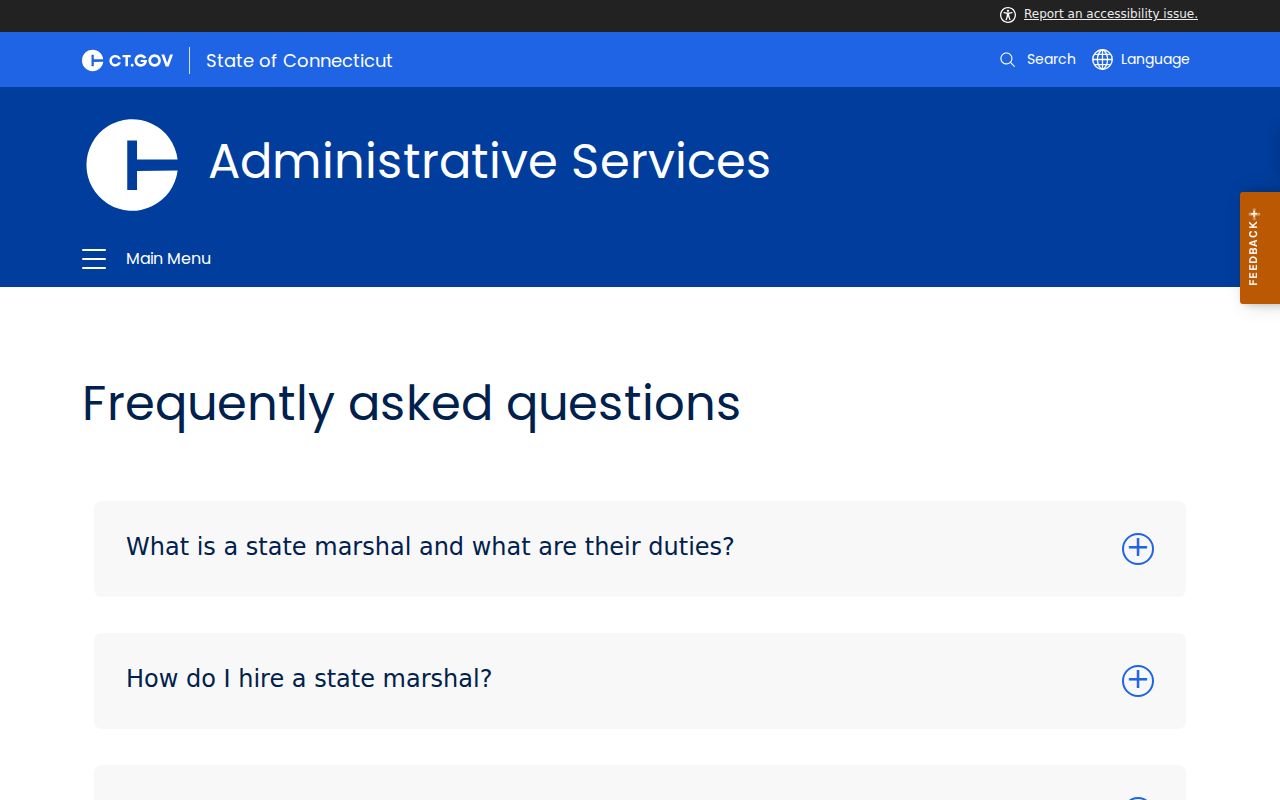
The official State Marshal Commission FAQ lays out the civil role that replaced part of Hartford County's old county system. That page is the authoritative route for marshals' duties.
Knowing the split saves real time in Hartford County. It keeps a criminal FTA question from landing at a civil process office, and it keeps a support-related capias question from being mistaken for a criminal charge.
Bench Warrant Issuance in Hartford County
In a Hartford County courtroom, a judge or judge trial referee works from the court record and the governing law. When the requirements are met, the order enters the court system and, where applicable, Connecticut's central electronic network. That network is PRAWN, the Paperless Arrest Warrant Network. Authorized criminal-justice agencies use it to pull detailed warrant information and spot the agency responsible. The public cannot get in. A public docket is a different animal. It may show the case, the court location, and events tied to the missed appearance, but it will not display the full PRAWN record or hand you any clearance certificate. The Connecticut Judicial Branch itself warns that its public case lookup is a service, not the official court record. Plenty can hide from view. A case may be protected, erased, sealed, juvenile, outside the displayed time range, or simply not updated yet. Even a case you can see won't say whether the court later recalled a warrant, which is why the Hartford County clerk remains the real checkpoint.
From Missed Appearance to Hartford Court Contact
Think you missed a Hartford County court date? Start by finding the notice, docket, bond paper, or any document that names the court. The Judicial Branch pending criminal and motor-vehicle lookup can help recover that location when the case is publicly displayed. You can search by last name, first initial, birth year, a year range, location, and category. One quirk matters. The form matches last names on a begins-with basis, so similar surnames return neighbors, and careful checking is part of the job.
- Use the pending criminal and motor-vehicle lookup only for case and court context.
- Record the docket number, category, and court location without copying unrelated people's details.
- Call the clerk through the current Judicial Branch directory and ask about the court's status-inquiry procedure.
- Speak with counsel before appearing when arrest, bail, or release consequences are a concern.
A blank screen is not a reason to ignore a Hartford County notice. Only the court or an authorized agency can confirm whether process is open, so call before you relax.
How Bench and Arrest Warrants Differ
Both tools can put a person in custody, but they grow from different roots. A bench warrant usually follows a broken obligation to a court already holding a case. An arrest warrant generally follows a judge's probable-cause finding tied to an alleged offense, and Connecticut sometimes uses the term rearrest warrant when custody follows a release or court-order problem. Labels on a website settle nothing. The signed order and docket fix the legal posture, whatever a Hartford County search result calls it.
| Point | Bench warrant | Arrest warrant |
|---|---|---|
| Typical origin | Missed appearance or court-order issue | Probable-cause application |
| Core record | Existing docket and court order | Application, affidavit, and judicial order |
| Public view | Possible docket context, not live status | Some material after arrest, subject to limits |
| Next route | Issuing clerk and counsel | Responsible agency, court, and counsel |
For the companion process, the Hartford County arrest warrant lookup explains police execution and record access.
Hartford County Dockets Are Context, Not Clearance
A Connecticut docket number packs real information into one string: a location code, a case type, a two-digit case year, a seven-digit unique number, and a suffix. Reading those parts helps a Hartford County clerk route your question fast, especially if your paperwork is incomplete. Each piece has a job. Learn them before you call.
- Location code
- Points toward the GA, JD, or other court unit.
- Case type
- Distinguishes criminal, motor-vehicle, or another category.
- Year and number
- Help identify the particular file.
- Suffix
- Completes the court's identifier where applicable.
Never read pending as warrant active. A closed-looking entry does not prove all Hartford County process has ended either. Ask the clerk directly whether the public docket holds the current order or whether another official route is required.
Clearing a Bench Warrant in Hartford County
No website offers a universal recall button. Clearing a bench warrant in Hartford County starts with the court that issued it. A lawyer can tell you whether a motion, a new calendar date, a voluntary appearance, or a surrender procedure fits your file. The clerk has a narrower role. That office can explain public docket entries and its own procedures, but it cannot give legal advice or promise what a judge will decide.
- Confirm the court location and docket through a verified official channel.
- Ask the clerk what current procedure applies to the missed appearance.
- Consult a Connecticut criminal-defense lawyer or the Office of the Chief Public Defender if eligible.
- Follow the court's directions on appearance, motion, bail, and any separate obligation.
- Obtain confirmation from the issuing court rather than assuming payment or attendance automatically recalled the order.
Caution: Do not ignore a possible bench warrant or rely on an unofficial payment demand; verify the court and contact route first.
Hartford County Release Steps Depend on the Order
Release after a Hartford County arrest on a bench warrant runs through Connecticut General Statutes §54-64b. Sections 54-63c and 54-63d shape the bail interview and any release conditions. Every case lands differently. The court may set nonfinancial terms, financial terms, a required appearance, or other instructions tied to the warrant and the underlying file. No page can predict bond or promise a fast way out. There is no Hartford County jail bond window. Your next step depends on timing and the order itself. That could mean the arresting agency, the Superior Court clerk, a bail commissioner, the correctional facility, or appointed or private counsel. The Office of the Chief Public Defender keeps a Hartford office at 55 Farmington Avenue, eighth floor, Hartford. Call 860-509-6400. The office's own notice warns that it never phones anyone demanding bail money.
Hartford County Courts That Issue Bench Warrants
Bench warrants in Hartford County come from a handful of downtown courthouses. Hartford Geographical Area 14 sits at 101 Lafayette Street, Hartford, CT 06106. The clerk and public information line is 860-566-1630, extension 3032. Hartford Community Court sits at 80 Washington Street, with 860-756-7020 listed for its clerk. The Hartford Judicial District at 95 Washington Street handles civil, family, and other functions. These Hartford County addresses route your contact; they do not confirm warrant status. Only the issuing court can do that.
| Area | Usual official route |
|---|---|
| Hartford and West Hartford | Hartford-area Superior Court location shown on the docket |
| New Britain | GA15, 20 Franklin Square |
| Bristol | GA17, 131 North Main Street |
| Manchester | GA12, 410 Center Street |
Where you live does not settle venue for a Hartford County bench warrant, so check the docket and the current Judicial Branch directory before calling or visiting any Hartford County courthouse.
Hartford County Civil Capias Questions
A civil capias in Hartford County is not the same as a criminal bench warrant. State Marshal materials sometimes call it capias mittimus. The manual treats it as civil arrest process. It follows a violated court order or a failure to appear after a summons, subpoena, or citation. Family-support cases are a common setting. The arrest power ties to the process violation, not simply to owing money. State marshals may execute capias process statewide under State Marshal Commission rules. Constables and certain special officers hold defined authority too. Judicial marshals act in courthouse and custody settings. Questions about a single order belong with the issuing Superior Court family or support unit, your lawyer, or the official marshal channel. The Commission takes general calls and complaints at 860-713-5372. Hartford County posts no one-stop public capias database, and no fee or resolution outcome should be assumed.