
Inside the Hartford County Most Wanted Program
Hartford County has no most wanted program in the county-sheriff sense familiar elsewhere. Connecticut abolished its county sheriffs in 2000. Since then there has been no Hartford County sheriff office and no county jail keeping a public roster. So where do wanted notices come from? Hartford Police, neighboring municipal departments, Connecticut State Police, state prosecutors, or a federal task force can each post one through an official channel. Each notice backs a focused investigation. Hartford Police publishes no general most-wanted roster on its official pages. That gap matters. Old social posts, news stories, and commercial lists often pose as a live program. For Hartford County tips, trust the agency's own channel only.
Why Hartford County Has No Sheriff Roster
Hartford County has the geography but no county warrant roster. Hartford is Connecticut's capital and an old county seat. Yet no county agency here handles criminal process. Superior Court judges issue the warrants. Municipal and state police execute criminal warrants through restricted justice systems such as PRAWN, while OPM publishes only aggregate warrant counts. State Marshals carry civil capias and other civil process. Each role is real. None of them creates a Hartford County sheriff most-wanted page. Some sites still promise a county roster because the phrase is common elsewhere, but that framing does not fit Connecticut. The safe test is institutional: confirm the page belongs to an official municipal, state, or federal agency, check its date, and follow its tip instructions. If no current notice exists, skip the unofficial compilations.
How Hartford County Most Wanted Lists Work
A Hartford County wanted notice reflects one narrow priority, never every outstanding warrant in the county. Seriousness can drive the pick. So can investigative need, a credible public-safety concern, or the value of public location information. Notices come down after an arrest, surrender, recall, identification error, or a change in strategy. Publication can lag the system.
Note: A wanted notice is a dated agency snapshot, while absence from any public notice does not establish that no warrant exists.
The agency's current page controls. Screenshots go stale too. In Hartford County, a repost or cached copy can outlive a notice that has already changed. Verify through the original government channel before sending a tip, and never treat a public alert as authority to confront or detain anyone.
Hartford County Notices: Source Check
Before trusting a Hartford County wanted notice, check the domain, date, agency name, and contact method. Hartford Police uses its official city website for contacts, reports, tips, and arrest logs. The arrest log is history. It is not a wanted roster. Connecticut State Police uses official state government pages. Federal matters should trace to the United States Marshals Service or the District of Connecticut, never to a copied image.
- Open the original municipal, state, or federal government page.
- Check the notice date and whether the agency still displays it.
- Read the exact tip directions and emergency warning.
- Do not copy, repost, or build a separate name list.
- Send only relevant facts and then step away.
A real Hartford County notice never demands payment. No tipster should buy a gift card, send cryptocurrency, or pay to unlock a roster.
Sending a Most Wanted Tip Safely
Use the tip route the current official notice names. Hartford Police lists 860-722-TIPS (8477) for anonymous tips and 860-757-4000 for routine non-emergency contact. Nearby Hartford County departments publish their own channels. Bristol lists 860-585-TIPS. West Hartford posts a local tip telephone and email. Route a tip about a specific notice to the issuing agency, since it can connect the information to the right investigation.
- Call 911 only for an immediate threat or emergency in progress.
- For non-urgent information, use the official notice’s tip line or form.
- Report location, time, direction of travel, and other observed facts.
- Do not approach, follow, message, warn, or try to hold the person.
Key point: Preserve distance, share observed facts through the official channel, and let law enforcement assess and act on the information.
Hartford County Crime-Stopper Channels
Tip terms change with each program. Anonymity and reward rules come from the current announcement alone. Hartford County agencies have used text-tip technology and Crime Stoppers style channels. History still helps. An old program page shows how state and local police cooperated, and the Connecticut State Police tip-program announcement documents that work with no fugitive roster attached.
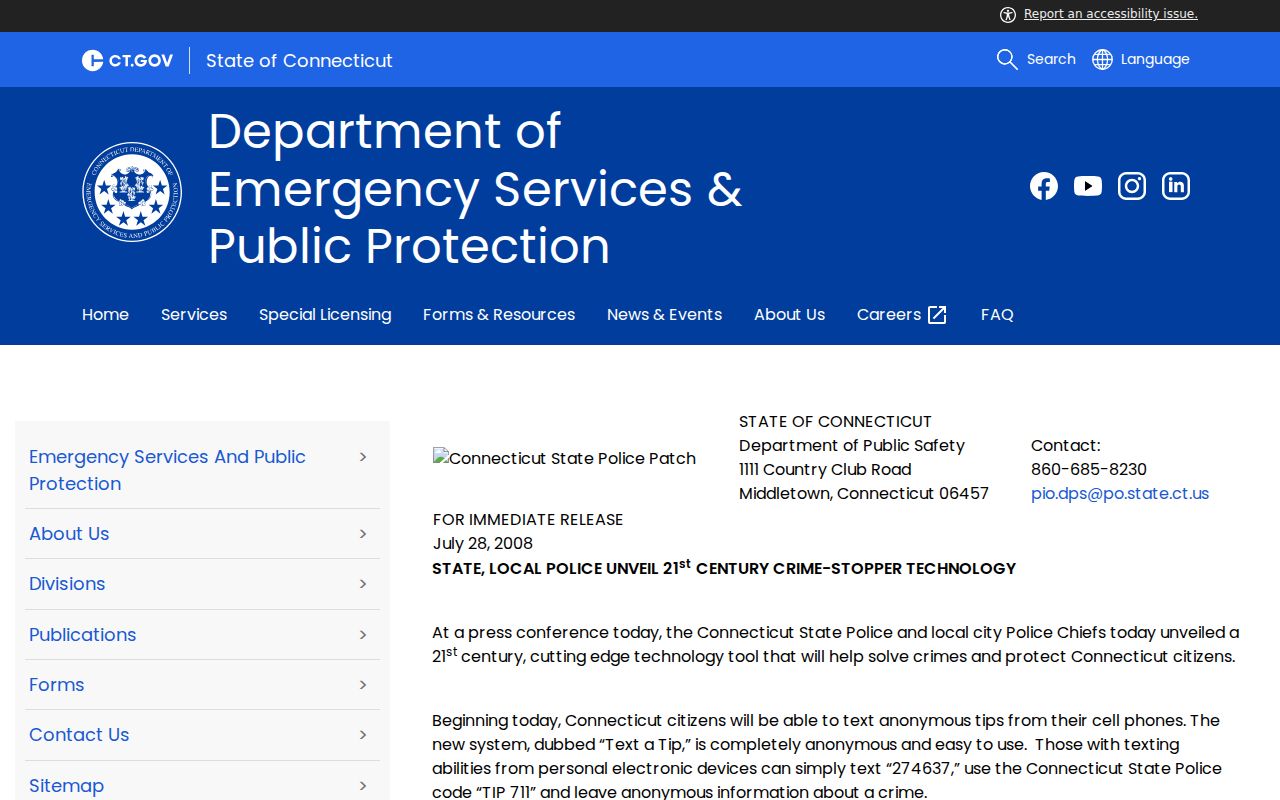
A Hartford County program's history is not its present. That older announcement explains where a channel came from. The live agency page supplies today's tip method and reward rules.
Hartford County Warrant Roundups
Hartford posts no warrant-amnesty, safe-surrender, or roundup event. A roundup, if one is announced, is a short enforcement push, never a full active-warrant list. It might target one type of process, a group of court matters, or a single operational priority. Its start and end dates would matter as much as the agency name. So treat any old roundup notice as expired. Never republish names it once highlighted. Hartford County residents who think a case touches them should call a lawyer and the Superior Court clerk. A case-specific check still governs. The event ending does not cancel judicial process. That check must come from the court.
How Most Wanted Differs From an Active Warrant
A most-wanted notice and an active warrant are not the same thing in Hartford County. A notice is a public alert that an agency chooses to post. An active warrant is judicial process that sits unserved in court records. Most active warrants never get publicized at all. A notice can also linger online after its status changes, so treat neither list as an invitation to investigate anyone.
| Feature | Most wanted notice | Active warrant |
|---|---|---|
| Scope | Selected agency priority | Any warrant still operationally open |
| Public form | Dated notice may be published | No public statewide name list |
| Source | Police, prosecutor, or task force | Superior Court and authorized justice systems |
| End point | Agency removes or updates notice | Service, recall, quash, or other court action |
Want the fuller distinction? The Hartford County active warrant search covers the limits of PRAWN and OPM reporting.
Hartford County Federal Fugitive Notices
Federal fugitive notices work differently from Hartford Police and Superior Court matters. The District of Connecticut and the United States Marshals Service answer to a federal jurisdiction, not a county one. They may post wanted information or ask for tips on a federal case. A Hartford address or Hartford event does not make that notice part of a Hartford County roster. The charging jurisdiction and the responsible agency stay federal throughout.
Stick with an official .gov page and whatever contact the current notice itself shows. Resist the urge to merge federal, municipal, state, and civil-capias records into one big list, because they answer to different systems. A federal wanted notice may involve sealed or limited court information. PACER can offer public case context, but public access to a federal docket is not the same as access to an operational warrant.
When You Believe You Are Listed
Believe a Hartford County wanted notice concerns you? Do not call the tip line to negotiate, and do not show up unannounced at an agency office. A Connecticut criminal-defense lawyer can verify the notice, pull the Superior Court docket, reach the responsible agency, and walk you through voluntary surrender and release. The Hartford Office of the Chief Public Defender sits at 55 Farmington Avenue, eighth floor, and answers at 860-509-6400. That call is the safer first move.
Important: Consult counsel before surrender, do not send money to a caller, and never assume that deleting or changing a web notice clears a warrant.
What happens after an arrest on a court warrant in Connecticut turns on the charge and the release order. The court, a bail commissioner, the correctional facility, or appointed counsel supplies the next step. Hartford County has no jail bond window. Bond gets set elsewhere. Only the court and the agency holding the warrant can resolve what sits behind a notice, so treat that document as a starting point rather than an ending. Families can help in simple ways. Save the original notice link, write down its date, and find the court that handles the case, all without posting the notice again. Skip contacting witnesses or arguing the allegations online. Counsel is the right go-between for legal questions and for surrender. If the notice vanishes, that alone proves nothing. The agency may have made an arrest, fixed a record, changed tactics, or simply updated the page. Confirm through counsel and the court. A tip line collects information. It does not clear warrants.